Sunday, November 28, 2010

How to Choose a Solar Iphone Charger

With the rapid growth in the environment-conscious, solar chargers are growing in popularity. More and more people want to know how to choose a good solar charger for your small electronic devices. The following are some tips to learn from my experience
There are many solar chargers on the market. They vary in size, shape and function. For this reason, choosing the correct charger for your devices can often be difficult and confusing. There are several factors to consider before buying a charger. Some of them are discussed below.
The size and power
There is usually a correlation between the size of the charger and the amount of energy it can generate. The larger the solar panel, solar cells that can hold more, and the more power it can produce.
When deciding on the size of your boot, you must take into account the devices to be loaded. If only iPhone battery charging, the battery of your camera, or other small mobile device, then a small charger will suffice. But if you charge your laptop or your refrigerator, you will need a bigger boot.
Charging time
The charging time depends on the size of the charger. In general, though not always, smaller shippers will generate less energy than large shippers given an equal amount of time.
Support
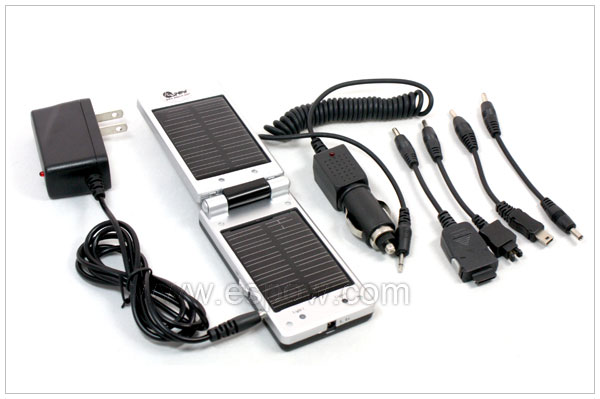
Your mobile phone, camera and laptop require different plugs and different supply voltages. Portable chargers usually come with various plugs and adapters. In determining that the charger is best for you, check plugs and adapters different charger each can contain.
Trip Plans
Your travel plans will also influence the type of charger you can use. If you are traveling on foot, camping or hiking, for example, a large magazine it difficult. A charger small, light weight is the best option for you in these conditions. Conversely, if you travel by car you can afford to carry a larger charger.
Water resistance and heat tolerance
This is also determined by their travel plans. If you are planning to use the charger in your car, you will require a charger with a high tolerance for heat as temperatures inside cars can become very hot. On the other hand, if there is a possibility that you and your charger may be exposed to water, then you should opt for a waterproof boot.
Cost
Choose a charger that fits your budget. You’ll need to compare different options, weigh the pros and cons of each magazine to make an informed decision.
Read More:
http://www.espow.com/wholesale-batteries-chargers-solar-chargers.html

Tuesday, October 19, 2010

How to select a solar charger for your mobile phone

A popular eco-friendly  way to keep your mobile phone charged is with a solar charger.
Most of us are confused by the available variety of these solar powered battery chargers, so what do you need to know before you choose one?
There a two important considerations

How powerful does the solar charger need to be?

Look at the nameplate data on the original charger, the one that came with the mobile phone. Read the part that states the output DC volts and milliamps, for example it may have OUTPUT DC 5.0 volts  900mA. This tells us the charger  provides a voltage of 5 volts, so the solar charger must be capable of providing 5 volts output as well.
You can use a charger that puts out a bit more voltage, say 5.5 volts or 6 volts but not less than 5 volts.
Why? ok here's a basic lesson in electricity: Volts is the pressure of the electricity in the wire. Let's compare electricity to water. Imagine you have long garden hose and you are trying to fill a water tank on a hill high above the  tap, now if the pressure of the water system is too low you won't be able to fill the tank because the system water pressure is too low to push the water up the hill, it's the same thing with electricity if the voltage (electrical pressure) is too low it wont flow through the circuit.
Amps is the current flow. Getting back to our garden hose, this can be compared to water flowing through the hose, A high water flow will fill the water tank sooner. Therefore a higher  amperage will recharge your battery sooner. A solar charger that supplies more amps is preferable to one that might supply the same voltage but a lower amperage.
A very high amperage can burn out the electronic circuit, but with solar cells that's not a problem because they are too small to provide a high current flow.
Ok, here's a quick lesson in photovoltaics:  All solar cells provide about 0.5 volts, that's a matter of physics, so to get 6 volts twelve cells are connected together like beads on a string. This string of cells might only provide 0.1 amps (100mA) The solar cells are glued to a backing board and there you have solar panel. The power (Watts) this solar panel can generate is calculated by multiplying the volts times the amps. so 0.1 x 6 = 0.6 watts (600mW)
Remember our garden hose? that's like the quantity of water it can provide in certain tome so water pressure times water rate of flow equals the quantity of water in given time and Volts X Amps = Watts, same thing! simple Hey!

What cable and connectors do you need


All solar chargers come with several adaptors to fit various mobile phones and also other popular personal electronics like Ipods, iphones and MP4 devices. Look at the wide range of solar charger adaptor tips that are available. The good news is the later model mobile phones are standardizing their power adapter tips, this will make your selection easier. The modern trend is toward the micro- USB plugs like those used with the latest Nokia phones.
But always confirm the compatibility of the adaptor tip with your mobile phone because some tips look identical but may have different pin configurations.